
Dear Harlem history friend,
THE PULSE
A Harlem Roots Newsletter • Issue No. 1 • October 2026
Every corner of Harlem has a story. Some are written on plaques. Some live in photographs. Some are still carried in the memories of neighbors who know what a block used to sound like on a summer evening.
This week, we're stopping at the Hotel Theresa.
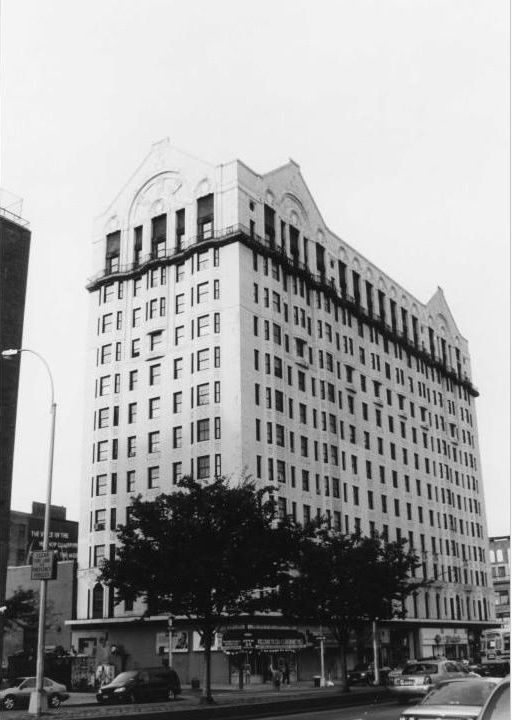
At first glance, the Hotel Theresa might seem like just another old marquee on 125th Street. But if we slow down for a moment, we find a story about ambition, protest, and the world stage Harlem became.
Here's the mini history lesson
In 1913, a hotel opened at 125th Street and Seventh Avenue that would become one of the most important addresses in Black America. The Hotel Theresa didn't admit Black guests until 1940 — but once it did, it quickly earned a new nickname: the “Waldorf of Harlem.” The second Black manager was William Brown, whose son, Ronald Brown, became the first African American secretary of commerce, serving from 1993 to 1996 under President Bill Clinton.
Joe Louis celebrated there. Josephine Baker stayed there. Malcolm X ran his Organization of Afro-American Unity out of an office inside it. And in September 1960, when Fidel Castro felt slighted by his midtown hotel during a UN visit, he moved his entire delegation uptown to the Theresa — where he met with Malcolm X and, a few days later, with Nikita Khrushchev, turning a Harlem hotel lobby into a stage for Cold War politics.
For a few remarkable years, one lobby on 125th Street held boxing champions, film stars, revolutionaries, and heads of state — all within earshot of the elevated train and a Saturday night crowd on Seventh Avenue.
What makes this story worth remembering is that Harlem could turn a once-segregated hotel into the center of the world, simply by being ready when history knocked.
Harlem's history is not only about famous names or landmark events. It is also about the everyday places where people gathered, worked, worshiped, performed, argued, dreamed, and built something that lasted.
A detail to notice
The building still stands at 2090 Adam Clayton Powell Jr. Boulevard, now known as Theresa Towers. Look up at the entrance and you can still make out traces of the original terra-cotta detailing from 1913 — a quiet reminder of the glamour that once greeted guests at the door.
Why it still matters
The Theresa is proof that Harlem's influence was never confined to its own blocks. What happened in that lobby reached Washington, Havana, and Moscow — a reminder that a neighborhood can shape world events even when the wider world wasn't ready to acknowledge it.
Before you go, next time you pass the Hotel Theresa marquee at 125th Street and Seventh Avenue, take one slow look around. Harlem has a way of hiding whole chapters in plain sight.
If this story made you think of someone who loves Harlem history, share it with a friend.
Kid’s Corner - The Harlem time Trotters
Episode 1 S is for Soldiers - Maya and King learn the Professor’s secret, and travel back to 1917 to meet the Harlem Hellfighters.
Street Names – Trivia
Quick: What's West 145th Street in West Harlem called between the western corner of Edgecombe Avenue and Riverside Drive?
See you in two weeks,
Carolyn
Responses